For more than a century, aviation has been defined by two constants: the power of combustion engines and the continual pressure to operate more efficiently. The earliest attempts tried to incorporate steam power, but this proved too unwieldy. Of course, the solution turned out to be combustion engines followed a few decades later by jet propulsion.
Today, however, a new propulsion era is emerging, and it’s not driven by fossil fuels, but by electrons. Electric aircraft, once confined to research labs, experimental aircraft, and one-off prototypes, are rapidly moving toward commercial relevance. And while full-scale electric airliners remain several years away, the technology is already reshaping expectations across the aerospace supply chain, from aircraft OEMs to airlines and the MRO sector.
Preparing for New Demands
For suppliers and fabricators, and particularly those specializing in aerospace-grade metals, this shift is profound. Electric propulsion does not eliminate the need for high-performance materials; in fact, it often increases demand for metal components capable of withstanding different types of stresses, environments, and structural configurations. Understanding this transformation is crucial for staying competitive in the decade ahead.
Why Electric Propulsion Is Gaining Traction
While the dream of electric powered commercial flight has been thriving for decades, several converging forces are accelerating the adoption of electric aviation:
Pressure to Reduce Emissions
Aviation is under mounting scrutiny for its carbon footprint. Airlines face stricter reporting requirements, international emissions-reduction targets, and escalating sustainability expectations from passengers and regulators. And electric aircraft – especially hybrid-electric and short-range fully electric models – bring the promise of zero or near-zero inflight emissions.
Lower Operating Costs
Because electric motors contain far fewer moving parts than turboprops or turbofans, they require less lubrication, experience reduced mechanical wear and are generally easier to maintain. Electricity can also be a cheaper energy source than aviation fuel, especially as fuel-price volatility continues.
Advancements in Battery Chemistry
Though battery energy density still trails jet fuel, recent breakthroughs in lithium-rich cathodes, silicon anodes, and solid-state battery designs are narrowing the gap. Weight remains the central challenge. However, for short-haul, commuter, and regional operations, modern battery packs are approaching workable performance thresholds.
Emerging Use-Cases
Currently, prospective electric aircraft will be extremely well-suited for:
- Short-regional routes (50–250 miles)
- Urban air mobility (UAM)
- Pilot training
- Island or remote-community transport
- Cargo feeder services
Many of these categories prioritize efficiency and low operating cost over long range, making electric propulsion a practical solution.
What This Means for Airlines
For airlines, the shift to electric aviation will be evolutionary rather than sudden. The first aircraft they encounter are likely to be small commuter planes, hybrid-electric retrofits, or electric vertical takeoff and landing (eVTOL) vehicles entering cargo or shuttle service.
Reduced Maintenance Burden
Electric motors can reduce engine-related maintenance tasks by up to 50 percent in some use-cases. Airlines may see fewer unscheduled engine removals and longer service intervals. However, this doesn’t eliminate complexity; rather, it shifts it—from mechanical to electrical systems.
New Infrastructure Requirements
Ground operations will evolve to support:
- High-capacity charging stations
- Battery swap capabilities
- Energy-management systems for peak-hour charging
- Thermal-management solutions for battery storage
Airlines will need to collaborate with airports, utilities, and OEMs to design infrastructure that is both scalable and cost-efficient.
New Fleet-Planning Strategies
Electric aircraft will reshape route maps. Their economic sweet spot is short legs with high frequency, which will allow airlines to:
- Reopen thin routes currently uneconomical with turboprops
- Increase service to secondary airports
- Reduce per-flight operating costs on regional networks
Airlines that adopt early may gain competitive advantages in both pricing and sustainability metrics.
What This Means for MRO Personnel
The emergence of electric aviation does not reduce the need for skilled technicians. In fact, it transforms the nature of their work.
High-Voltage Safety & Electrical Diagnostics
Electric aircraft require MRO teams to be proficient in:
- High-voltage handling procedures
- Battery health analytics
- Power-management software
- Inverter and controller maintenance
Many skills parallel those used in EV automotive repair, but aviation introduces higher certification standards and stricter safety margins.
Structural and Thermal Management Tasks
Electric aircraft place new stresses on airframes:
- Battery packs add concentrated weight loads
- Cooling systems must manage heat from motors and electronics
- Cabling channels and conduits require specialized routing
Metal-parts inspection, replacement, and fabrication, which are already core MRO duties, will become even more essential as airframes evolve.
Battery Life-Cycle Maintenance
Battery systems introduce new aftermarket opportunities:
- Routine cycling and health diagnostics
- Cooling system inspection
- Replacement and refurbishing schedules
- End-of-life recycling protocols
MRO facilities equipped to handle battery modules will become indispensable partners in airline electric-fleet operations.
Impact on Aerospace Parts Suppliers and Fabricators
For metal-parts manufacturers, electric aircraft introduce both familiar demands and exciting new opportunities.
New Structural Components
Electric aircraft distribute weight differently than traditional platforms. Battery modules often require:
- Reinforced structural enclosures
- Crash-resistant metal housings
- High-precision brackets and mounts
- Fire-resistant shielding
These components frequently rely on aerospace-grade aluminum, stainless steel, titanium, and nickel alloys.
Thermal-Management Hardware
Electric propulsion generates heat at:
- Motor casings
- Inverters and power electronics
- Battery packs
This drives demand for fabricated metal:
- Heat exchangers
- Cooling plates
- Mounting rails
- Protective enclosures
Material suppliers who understand thermal dissipation and corrosion-resistant alloys will play a critical role.
Lightweighting Imperatives
Every gram matters in electric aviation, making lightweight metals essential. Aluminum-lithium alloys, advanced titanium structures, and precision-fabricated components that reduce mass without compromising strength will be in high demand.
Increased Need for High-Integrity Welds and Fabrications
Electric aircraft place a premium on:
- Tight dimensional tolerances
- High fatigue-resistance structures
- Complex assemblies with integrated electronics mounts
Metal suppliers capable of precision welding, machining, forming, and finishing will find expanding opportunities as OEMs design next-generation airframes.
Regulatory and Certification Alignment
As with any aerospace shift, compliance is critical. Suppliers with demonstrated AS9100 quality systems, traceable materials, and proven audit readiness will be best positioned to support electric-aircraft OEMs and MRO partners.
A Gradual but Significant Transformation
Electric aircraft will not replace long-haul jets anytime soon. Batteries will not surpass the energy density of Jet A in the near term, and widebody fleets will continue to be powered by advanced turbofans for decades.
But in the regional, commuter, and emerging-mobility segments, areas where many airlines face cost pressure and operational complexity, electric aircraft hold the promise of redefining what is possible. Reduced emissions, lower operating costs, and quieter operations will make short-range aviation more accessible and more sustainable.
For airlines, MRO professionals, and aerospace metal-parts suppliers, this shift is not something to wait for, it’s something to prepare for. Those who begin adapting now will be well-positioned to support the next generation of aircraft and the new maintenance ecosystem that will accompany them.
AAA Air Support: Your Reliable Aviation Parts Partner
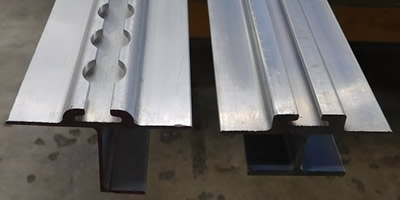
As a leading manufacturer and distributor, AAA Air Support supplies high-quality aerospace materials, including roll-formed stringers, extruded parts, and a wide range of aluminum, steel, and titanium products. We’re committed to providing innovative, sustainable solutions that meet industry standards and contribute to a greener future.
Beyond our material offerings, we also provide comprehensive precision machining services. Our state-of-the-art facilities and expert team ensure consistent quality and timely delivery. Whether you need large or small quantities, AAA Air Support is your reliable source for accurate, efficient, and quality aerospace components that you can trust.
We invite you to contact us today to learn more about how we can serve you.