The aerospace industry has always been at the forefront of innovation, constantly pushing the boundaries of engineering, materials science, and manufacturing processes. One of the most transformative technologies shaping the future of aerospace today is additive manufacturing, more commonly known as 3D printing.
From rapid prototyping to the production of complex, lightweight components, additive manufacturing in aerospace is changing how parts are designed, produced, and delivered. For manufacturers, suppliers, and MRO (Maintenance, Repair, and Overhaul) providers, this technology presents new opportunities to improve efficiency, reduce costs, and enhance performance.
Even the U.S. military has embraced additive manufacturing potential. An article from WarOnTheRocks.com has noted that,
“There’s no question that additive manufacturing has delivered some impressive wins in defense. Complex, high-performance components that were once impossible to make are now being 3D-printed and qualified for use. Across the military, each service branch has piloted additive to sustain aging equipment by printing legacy spare parts that suppliers no longer make. The U.S. Army, for instance, uses 3D printers at depots to fabricate obsolete vehicle parts on-demand, avoiding long lead times. The Navy’s “Print the Fleet” initiative has explored printing everything and envisions someday printing larger components like aircraft wings or small drones in the field.”
We want to explore here the growing role of 3D printing in aerospace parts production, its benefits, limitations, and how it complements traditional manufacturing methods like roll forming.
What Is Additive Manufacturing?
Additive manufacturing is a process that builds parts layer by layer using digital design files. Unlike traditional subtractive manufacturing, which removes material from a solid block, 3D printing adds material only where needed.
In aerospace applications, additive manufacturing commonly uses materials such as:
- Titanium alloys
- Aluminum alloys
- High-performance polymers
- Nickel-based superalloys
These materials are selected for their strength, heat resistance, and lightweight properties – qualities that are critical factors in aircraft performance and safety.
Key Benefits of 3D Printing in Aerospace
- Design Freedom and Complex Geometry
One of the biggest advantages of additive manufacturing is the ability to create complex geometries that would be difficult—or impossible—to achieve with traditional methods.
Engineers can design, among other things, intricate internal channels for cooling, lattice structures that reduce weight while maintaining strength, and even consolidated parts that replace multiple components.
Having this enhanced degree of design flexibility allows for more efficient, high-performance aerospace components.
- Weight Reduction and Fuel Efficiency
Weight is a critical factor in aerospace. Even small reductions can lead to significant fuel savings over time.
Additive manufacturing enables:
- Topology optimization, removing unnecessary material
- Lightweight structures without compromising strength
- Reduced part counts through component consolidation
These improvements contribute directly to lower fuel consumption and reduced operating costs.
- Faster Prototyping and Production Cycles
Traditional manufacturing methods often require tooling, molds, or dies, which can take weeks or months to develop. With 3D printing, parts can be produced directly from digital files. This allows for rapid prototyping and testing and faster design iterations, as well as shorter time-to-market for new components.
For aerospace companies, this speed can accelerate innovation and improve responsiveness to changing requirements.
- On-Demand Manufacturing and Reduced Inventory
Additive manufacturing supports on-demand production, reducing the need to maintain large inventories of spare parts.
This is especially valuable for:
- Legacy aircraft with hard-to-find components
- Remote operations where supply chains are limited
- AOG (Aircraft on Ground) situations requiring quick turnaround
Instead of stocking every possible part, companies can store digital files and produce components as needed, saving space and reducing carrying costs.
- Supply Chain Simplification
Supply chain issues continue to plague the aerospace industry. According to a press release issued by the International Air Transport Association (IATA),
“Challenges within the aerospace industry’s supply chain are delaying production of new aircraft and parts, resulting in airlines reevaluating their fleet plans and, in many cases, keeping older aircraft flying for extended amounts of time. The worldwide commercial backlog reached a historic high of more than 17,000 aircraft in 2024, significantly higher than the 2010 to 2019 backlog of around 13,000 aircraft per year.”
Aerospace supply chains are often complex and global. Additive manufacturing can help simplify these networks by enabling localized production. Some of the many benefits include fewer suppliers and intermediaries, reduced transportation costs and delays along with greater control over production timelines.
For MRO providers and aerospace suppliers, this can lead to more agile and resilient operations.
Applications of Additive Manufacturing in Aerospace
3D printing is already being used across a wide range of aerospace applications, including:
Structural Components While still evolving, additive manufacturing is increasingly used for non-critical and secondary structural parts.
Engine Components Complex parts like fuel nozzles and turbine components benefit from additive manufacturing’s precision and heat-resistant materials.
Cabin Interiors Lightweight, customized interior components such as brackets, ducts, and seat structures are commonly produced using 3D printing.
Tooling and Fixtures Additive manufacturing is widely used to create jigs, fixtures, and tooling that support traditional manufacturing processes.
The Role of Additive Manufacturing in MRO and AOG Support
For MRO teams, additive manufacturing offers powerful advantages, especially in time-sensitive scenarios.
In AOG situations, where aircraft downtime is costly, 3D printing can:
- Enable rapid production of replacement parts
- Reduce reliance on distant suppliers
- Support temporary or certified permanent solutions
Additionally, additive manufacturing can be used to replicate obsolete or hard-to-source components, helping extend the life of aging aircraft fleets.
Limitations and Challenges
Despite its advantages, additive manufacturing is not a complete replacement for traditional aerospace manufacturing methods. A number of challenges still remain, such as:
- Material and Certification Constraints
Not all materials used in aerospace are suitable for 3D printing, and certification processes for additively manufactured parts can be complex.
- Production Speed for High Volumes
While ideal for small batches and custom parts, additive manufacturing may not be as efficient as traditional methods for large-scale production.
- Surface Finish and Post-Processing
Many 3D-printed parts require additional finishing processes to meet aerospace standards.
- Cost Considerations
Initial investment in equipment and expertise can be significant, particularly for smaller organizations.
Complementing Traditional Manufacturing Methods
Rather than replacing traditional processes, additive manufacturing works best as a complementary technology.
For example:
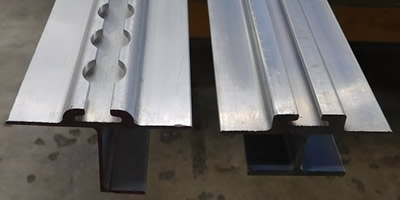
- Roll forming remains essential for producing long, uniform structural components like stringers with tight tolerances
- Traditional machining and forming methods are still preferred for high-volume production
- Additive manufacturing excels in customization, prototyping, and low-volume runs
By combining these approaches, aerospace companies can optimize both performance and efficiency.
The Future of 3D Printing in Aerospace
As technology continues to advance, additive manufacturing is expected to play an even larger role in aerospace production. Future developments may include:
- Expanded use of certified structural components
- Integration with digital supply chains and smart manufacturing systems
- Increased adoption of hybrid manufacturing techniques
- Greater use of advanced materials and multi-material printing
For aerospace suppliers and manufacturers, staying ahead of these trends will be key to maintaining competitiveness.
A Three Dimensional Approach: Where Innovation Meets Practical Application
Additive manufacturing is reshaping the aerospace industry by enabling faster production, greater design flexibility, and more efficient supply chains. While it doesn’t replace traditional manufacturing, it enhances it by providing new tools to meet the evolving demands of modern aviation.
For companies involved in aerospace parts production and MRO support, the opportunity lies in leveraging the strengths of both additive and conventional methods.
At AAA Air Support, we help facilitate aerospace operations with precision-manufactured aluminum roll form stringers, as well as other quality parts and components, all backed by responsive service and deep industry expertise. As manufacturing technologies evolve, we remain committed to delivering the high-quality materials and support our customers rely on, whether through traditional processes or innovative solutions.
Need reliable aerospace components delivered fast?
Contact us today to learn how we can support your production and maintenance needs with certified materials and AOG-ready service.