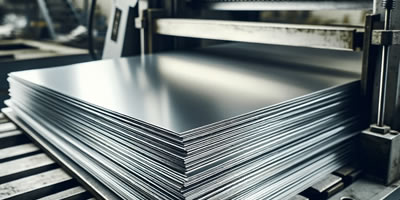
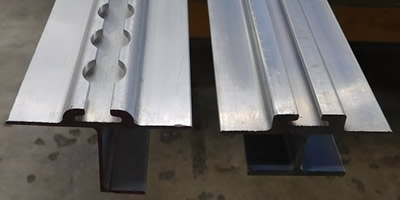
Aluminum is an extremely versatile aerospace and aviation industry material that is used in a wide range of products in and on aircraft.
There are a variety of methods for shaping aluminum products, but all of them involve using some sort of die or mold. Drawn and extruded aluminum are the two primary types of aluminum production. With both methods, the aluminum is first formed into a billet, or long tube, then cut to the specific length, depending on the product.
Cold Finished Aluminum Products
Cold finishing for aluminum is more commonly referred to as cold drawing or cold rolling, which are forms of cold finishing aluminum by pulling material through what is known as a draw die or rollers. The term cold simply indicates forming the metal at room temperature as opposed to heating it first.
One definition of cold drawing describes it as,
“Bar, tube, or wire manufacturing process in which a metal rod is pulled through a die without preheating. Cold drawing changes the mechanical properties of the metal and gives the final product a bright finish.”
Cold finishing can also produce sheet products, such as corrugated aluminum, and is a process performed at room temperature to produce extremely close outer diameter tolerances while cold finishing the microstructure.
According to information from the Virginia Polytechnic Institute and State University,
“In general, “rolling” is a process that uses a pair of rolls to form materials. There are two rolling techniques, hot-rolling and cold roll-forming based on the temperature of the metal being used. If the temperature is above the crystallization temperature of metal, the process is called hot-rolling; otherwise it is called cold-rolling.
Cold-rolling can increase the material strength and improve the surface finish. Cold roll-forming uses thin sheets of steel to form into various shape sections such as floor and roof panels or C or Z shapes.”
According to an entry at Wikipedia, cold finished, or forming, processes are usually categorized into four major groups: squeezing, bending, drawing, and shearing.
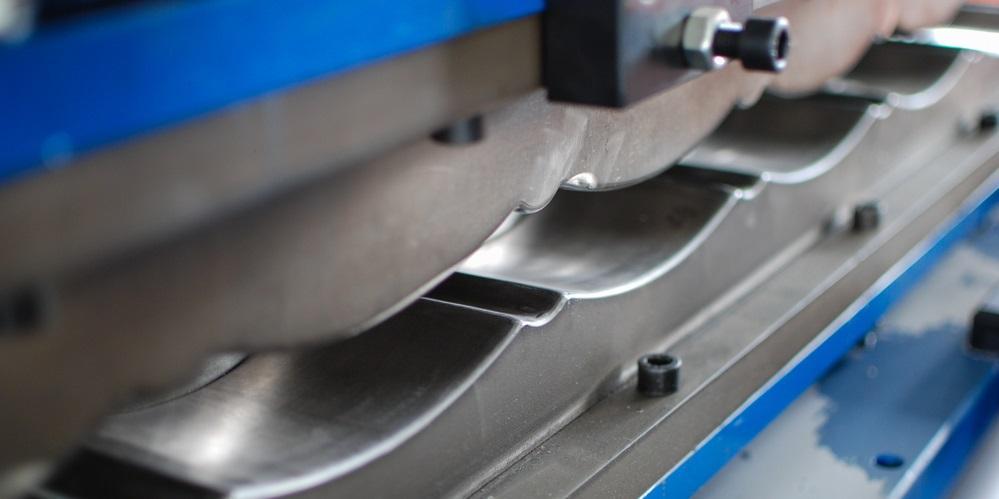
For example, roll forming aluminum requires the continuous bending of a long strip of sheet aluminum into a specified cross-section. The strip passes through consecutive sets of rolls with each set creating an incremental part of the bend until the desired cross-section, or profile, is completed.
Extruded Aluminum Products
Aluminum extrusion is a production process that has been around for a long time. Over 125 years ago, in 1894, the modern hot extrusion process was invented by an Englishman named Alexander Dick. Since that time, metallurgists and manufacturers have used this process as a common method for creating a variety of metal parts and other products.
And, due in large part to the relatively low tooling costs and its ability to form lightweight parts, aluminum extrusion is a popular forming method for many manufacturers.
One article describes the process this way,
“Extruded aluminum is made by heating the aluminum and forcing it through a die. What comes out on the other side is the shape of the final product. After the product comes out of the die, it is cooled and then stretched to remove any twisting that occurs during the cooling process.
As it hardens, extruded aluminum becomes stronger. The hardening process can take place at room temperature, but since that can be time consuming, most manufacturers employ heated rooms to temper the aluminum quickly.”
Extruded aluminum tubing is a common product using this method and there are two basic types.
One type is formed from an aluminum tube that is split and then resealed using high temperature, pressure and welds. The seam created during this process is sometimes visible to the naked eye and is not suitable for use under extreme pressure as there is a risk of the seam splitting.
The second process produces aluminum tubes by pushing a hollow billet through a die. This creates a tube without a seam, it can be used for pressurized gases and liquids.
The Versatility of Aluminum
There are advantages with both types of forming methods and the products that are made from them. In addition, there are differing strengths and weaknesses of the metal produced by each method. But for most end-users, the determining factor is often whether the part is easily acquired and easily made available.
We offer a wide variety of aerospace parts and other metal supply services. We specialize in aerospace roll forming. Roll forming is a process that uses a coil or strip of metal, which is continuously passed through shaping rollers and dies to form the desired profile.
We can manufacture roll form products using various grades of aluminum, steel and titanium and we can produce roll form in sections up to 75 feet in length, custom “one off” sections and multiple production runs.
No matter whether you need 100 feet of an aluminum alloy product, or just a few sheets of clad aluminum, AAA Air Support promises to always ship out your part orders quickly and efficiently. Our goal always is to provide your company with the means to complete that project or get that airplane off the ground and back in the air.